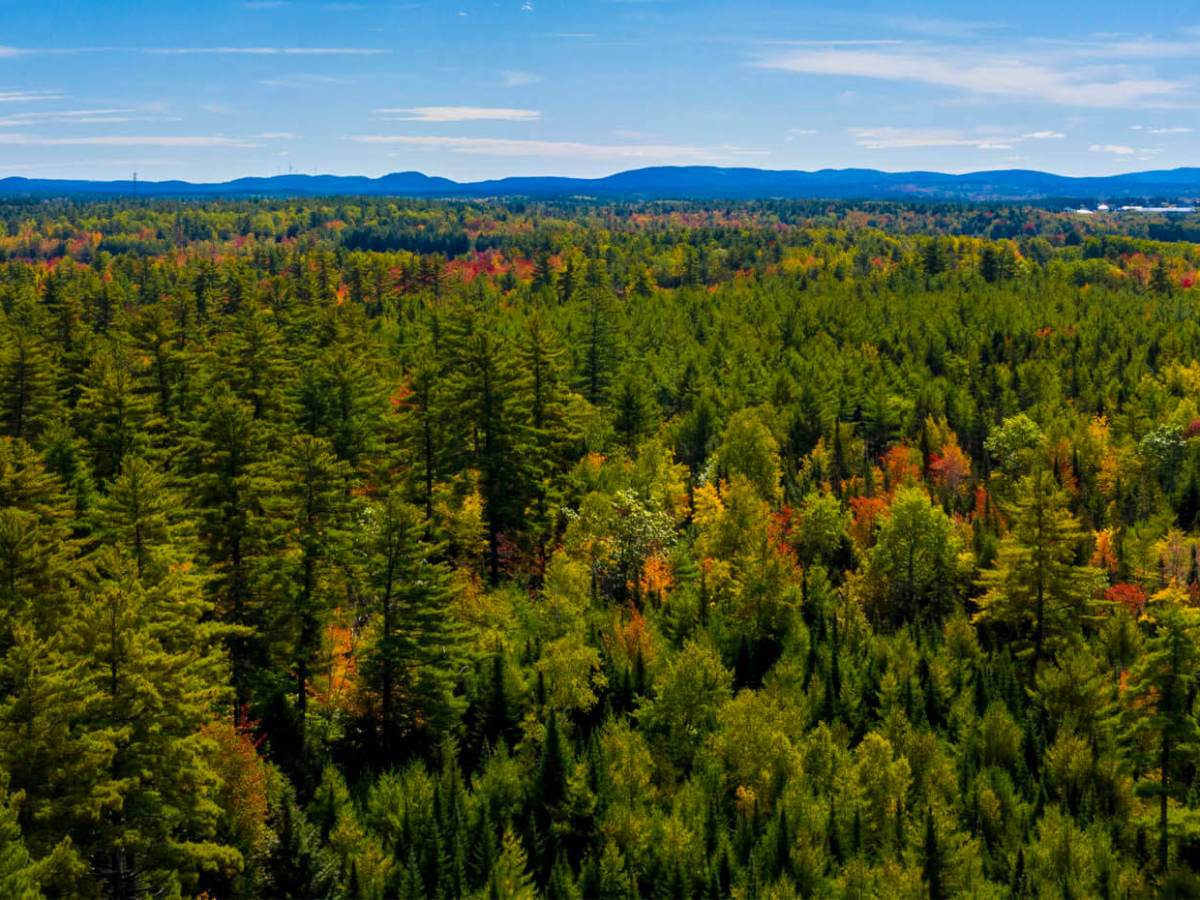
Call for Participation: XXth International Conference of the Society for Human Ecology
October 22 – 25, 2014
Bar Harbor, Maine USA

October 22 – 25, 2014
Bar Harbor, Maine USA
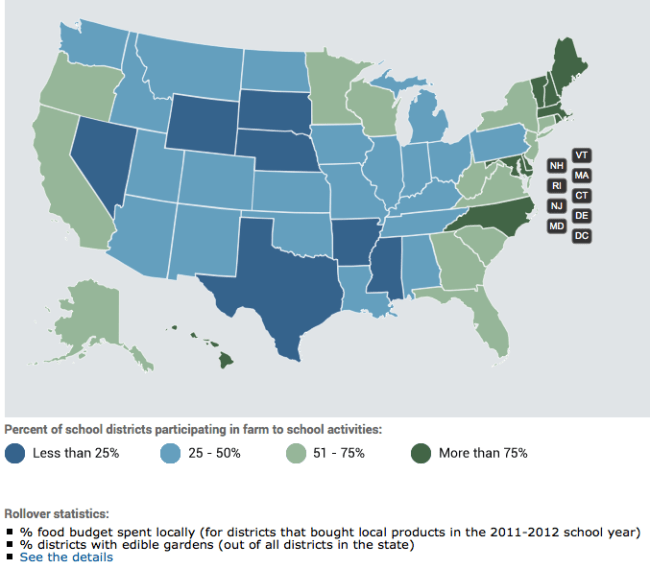
This December 6th, UMaine will host the Maine Food Summit, a collection of people trying to re-think the how the food system could work here in Maine. There is a very palpable energy in this sector these days, and lots of interesting developments and plans. How can we make food production and processing more local to benefit our local economy without sacrificing options, quality, or environmental benefits? Learn more at: umaine.edu/agriculture/maine-food-summit
The University of Maine has initiated a multi-disciplinary five-year research project on the role of native pollinators in the wild blueberry agroecosystem. This project is part of a larger Northeast funded pollination project involving the Connecticut Agricultural Experiment Station, Cornell University, University of Massachusetts, and the University of Tennessee. In this larger Northeast “umbrella” project, cranberries, blueberries, apples, and squash are focal the agroecosystems. Pollination ecology, bee disease ecology, landscape ecology, botany, economics, anthropology, pesticide chemistry, and insect pest management are the disciplines represented at the University of Maine. Pollination is the most important ecological process in production of fruits and nuts. The ecosystem service of crop pollination that the native bee community performs is a natural resource and one that some farmers protect and enhance through conservation practices. What cultural, sociological, economic, and ecological aspects of the important agroecosystems in Maine, and the Northeast in general, affect the prospects of native bees and actions that growers may take?
This assistantship in pollinator ecosystem services, human cooperation and social- ecological systems dynamics is designed for students interested in helping develop our quantitative understanding the dynamics of human behavior and culture as it pertains to the pollination services by native bees. The graduate student will work primarily with Dr. Waring (timwaring.wordpress.com) to develop new theory and conceptual models of human-environment interaction, and help to empirically test that theory and/or develop and explore precise models of social-ecological systems. In addition, the graduate student will work with other members of the pollinator project, especially Dr. Frank Drummond (http://sbe.umaine.edu/people/faculty/), the project leader and pollination ecologist. Some potential avenues of research in this project are: 1) testing current social- ecological systems theory using freshly collected empirical data or extant datasets on native bees, pollination, and farmer responses, 2) developing mathematical and/or computer models of coupled human-natural systems, exploring their implications and requirements, and ultimately testing their predictions, and 3) using experimental research on human cooperation within social-ecological systems, especially cooperative games methods. Each focus area is described below:
1) The graduate student will work to synthesize current social-ecological systems theory from the primary literature, gather data to test critical aspects of socio-ecological systems theory such through some combination of behavioral experiments (see area 3, below), surveys, ecological field work or by finding extant datasets.
2) The graduate student will work with Dr. Waring and other faculty to develop innovative mathematical or computer models of social-ecological systems, explore different formulations of the model system, and test its properties with mathematical stability analysis or sensitivity analysis, or related means.
3) The graduate student will survey the available experimental methods for measuring ecologically-relevant aspects of human behavior, especially cooperation, help devise suitable behavioral experiment(s) to test current social-ecological systems theory, and develop those experiments for implementation on the mobile online data collection system.
Qualifications:
A degree (preference given to individuals with an MS) in ecology or environmental science, environmental and resource economics, ecological anthropology, social psychology or a related field; excellent GPA and GRE scores; strong quantitative and computational skills; excellent communication and professionalism, demonstrated independence, and the ability to work respectfully and collaboratively in teams. Support includes a fellowship of $22-25,000/yr for four years, a tuition waiver, subsidy for health insurance.
Application Procedures:
Please submit the following information to timothy.waring@maine.edu or frank.drummond@umit.maine.edu with subject line “Pollinator Social-Ecological Systems Dynamics Assistantship”:
Review of materials will begin immediately and continue until the position is filled. Intended matriculation: Fall, 2014.
I presented the group selection of sustainable institutions simulation at the Computational Social Science Society of the Americas (CSSSA 2013) in Santa Fe today. Here is a PDF.
https://timwaring.info/wp-content/uploads/2013/08/gss-for-csssa.pdf
Schoodic Education and Research Center, Winter Harbor, ME
May 10th, 11th, & 12th, 2013

Human behaviors and social systems constitute a unique and important evolutionary domain. Human societies drive the global environment, yet despite their dependence on environmental resources, societies are often buffered from environmental influences on short and medium scales. Importantly, the successes and failures of human groups to manage and adapt to their environment influence the types of social structures that persist. Thus, cultural evolutionary theory could be of great value in the study of social-ecological systems and sustainability science. To date, evolutionary theories have little influence on ecological sustainability research. The goal of this workshop is to seed a collaborative research network on the evolutionary dynamics of social-ecological systems.
The workshop has two main objectives. The first goal is to establish an ongoing working group on the evolution of social-ecological systems. We will ensure future momentum by identifying and applying for working group grants from national research centers and other sources. One such application will be completed during the workshop, and funding targets identified. The second goal is to begin the work of developing and applying novel evolutionary insights and approaches to social-ecological systems research and sustainability science. To this end, we will outline and draft a synthetic paper on the evolution of social-ecological systems.
John Gowdy, Rensellear Polytechnic Institute
Marco Janssen, Arizona State University
Jennifer Jacquet, New York University
Tim Waring, University of Maine
Jeremy Brooks, Ohio State University
Paul Smaldino, Johns Hopkins University
Michelle Kline, University of California, Los Angeles
Sandra Goff, University of Maine