Growing an applied science of cultural evolution for a sustainable future

Last week, Dr. Tim Waring helped lead an international workshop on growing an applied science of cultural evolution for a sustainable future. The workshop was the culminating event of an applied working group project, funded by the Cultural Evolution Society (CES) Transformation Fund, and led by Dr Rebecca Koomen (University of Dundee) and Dr Tim Waring (University of Maine). Hosted by the Max Planck Institute for Evolutionary Anthropology in Leipzig (Feb 6-8, 2024), the workshop and the larger working group project contribute to the ongoing work of the Sustainability Working Group of the CES, and the applied science network Evolve and Sustain.

The project started in earnest this fall with a series of online focus groups with participants in the domains of government, education, community, NGOs, business, and grassroots groups. Starting from a simple set of key concepts from the science of cultural evolution, these groups met to discuss how to apply cultural evolution to sustainability, and the benefits and challenges of doing so in their domains. The lessons learned, and the relationships formed provided the basis for the workshop.
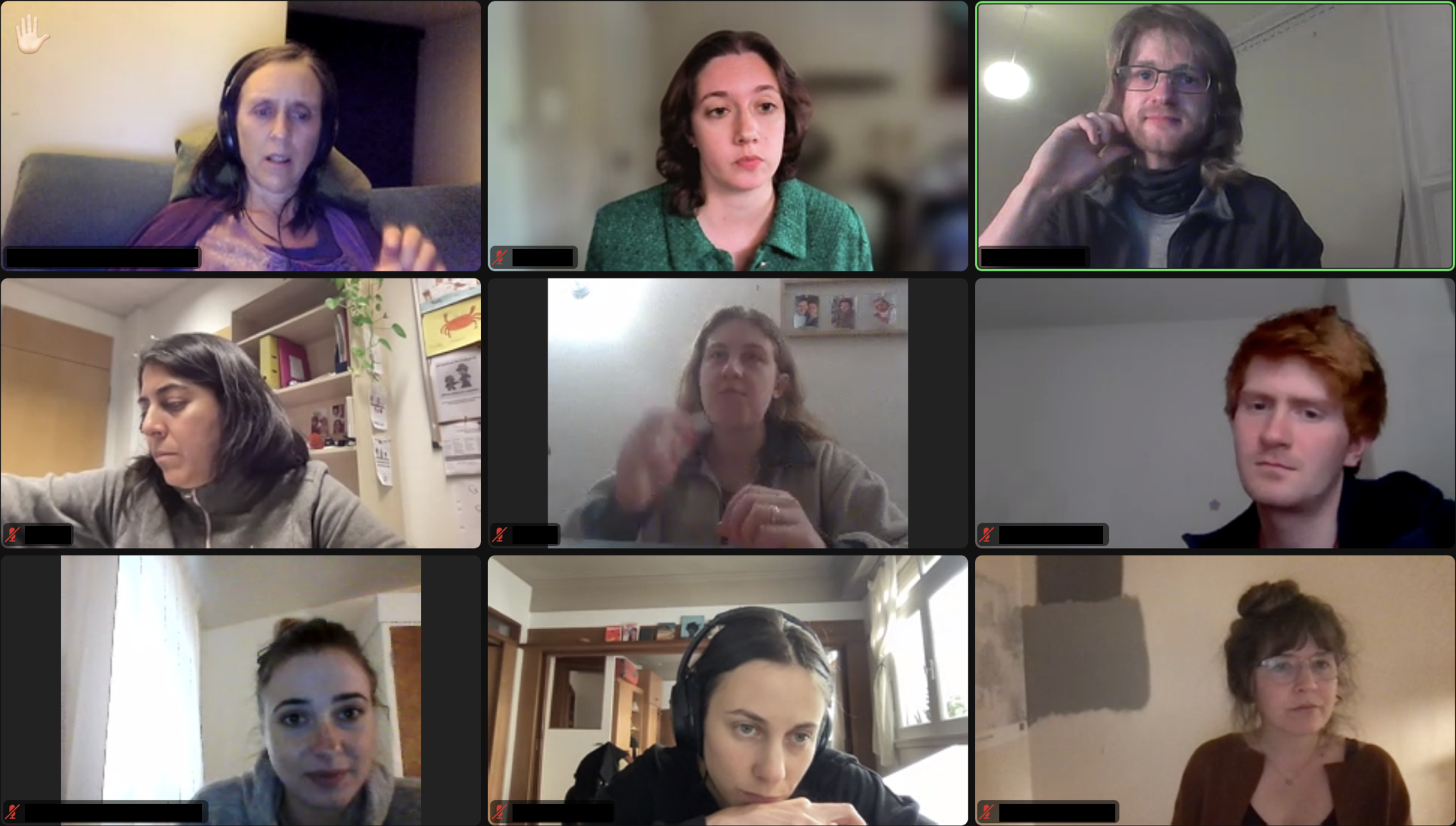
A group of participants discuss the benefits, challenges and methods for applying cultural evolutionary science to sustainability problems.

The workshop included guidance and instruction on effective researcher-practitioner collaborations from collaboration scholar and expert Adam Seth Levine, and an interactive art session with Chilean artist Antonia Lara, discussions and comparison of the lessons learned across domains, and work to develop new applied tools that leverage cultural evolution for sustainability impact. The workshop was also attended by variety of interested practitioners including experts from Environmental Defense Fund, and Rare.org with professional experience in making behavioral and social change for environmental sustainability, as well as sustainability education scholars, environmental grassroots organizers, and others.
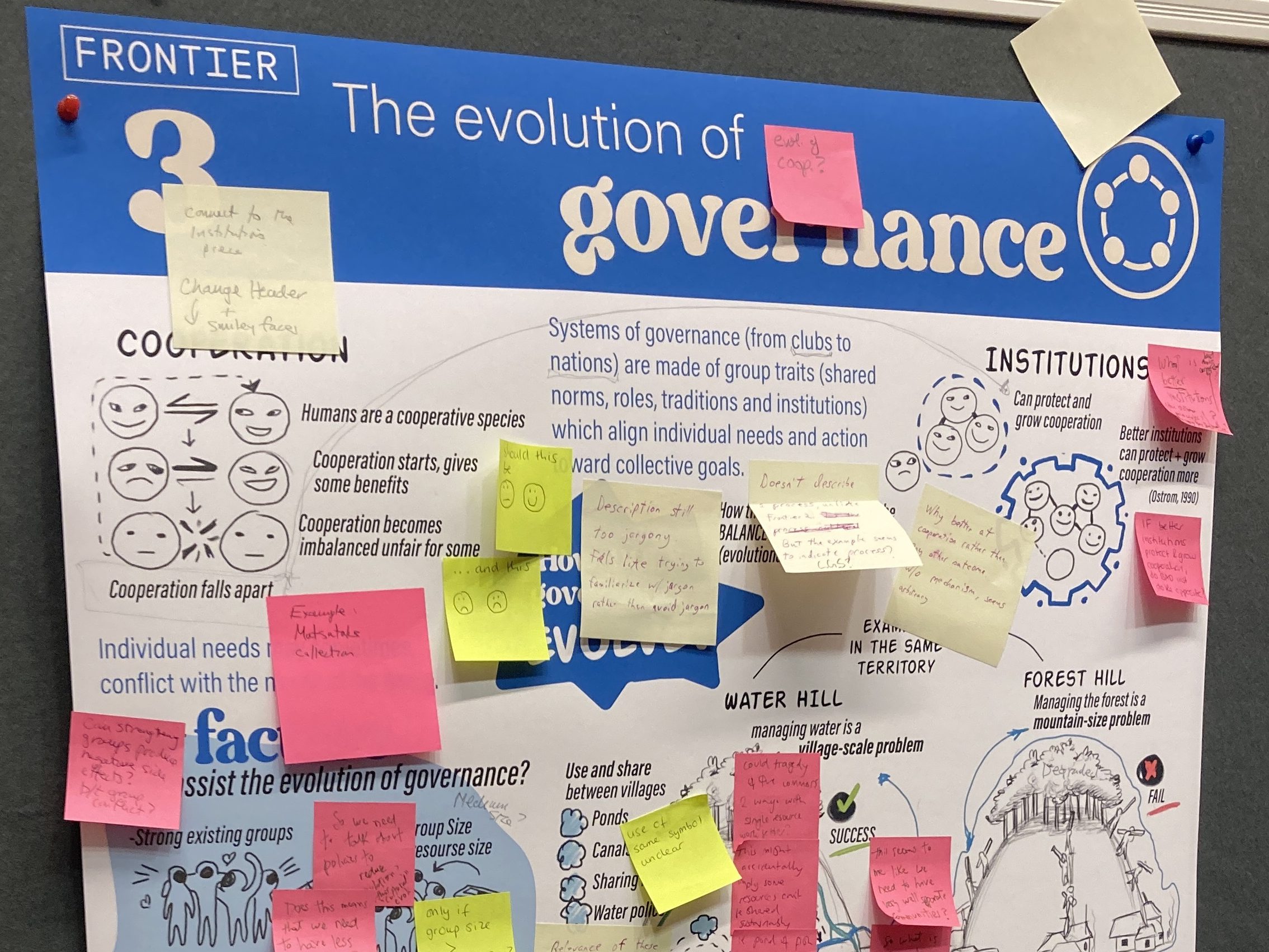
Participants shared ideas for visual communication through an interactive art session.

The workshop broke new ground and the effort to build a useful applied science of cultural evolution has taken an important step forward. We learned a lot from trying, and sometimes failing, to meet in the middle. And failure was the point. We must start from failure to learn how to succeed. So, we are not ready with amazing new tools or interventions to save the world, but we do have more clarity about how to find and build those tools, and a greater appreciation for the appetite among practitioners for the tools we might create.
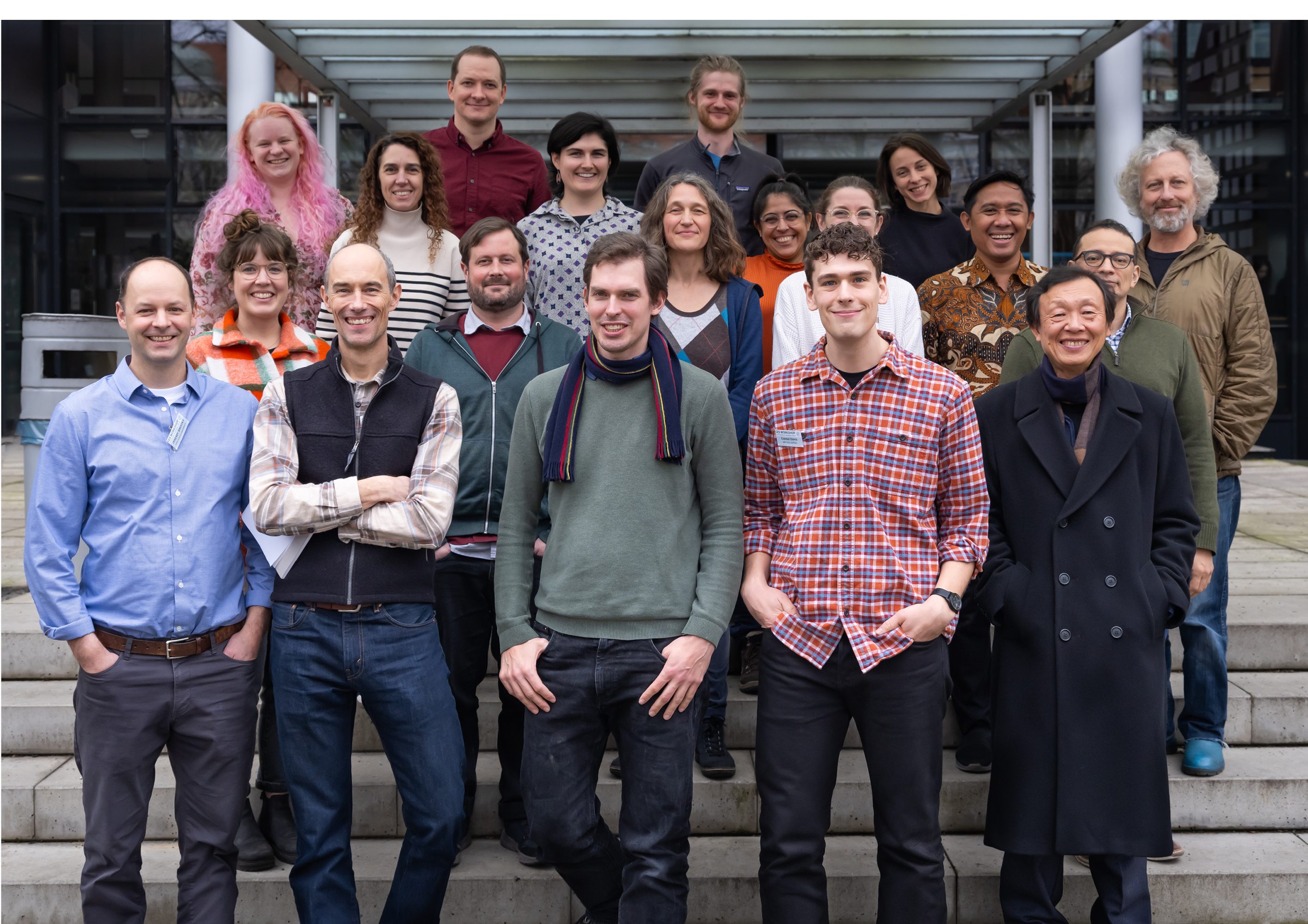
International workshop on growing an applied science of cultural evolution for a sustainable future. From left to right, bottom row: Jeremy Brooks, Tim Waring (coPI), Peter Søgaard Jørgensen, Connor Davis, James Liu. Second row: Rebecca Koomen (PI), Dustin Eirdosh, Susan Hanisch, Wendy Chávez-Páez, Anne Pisor (obscured), Moh. Abdul Hakim, Rainer Romero-Conyas (obscured). Third row: Sarah Wright (pink hair), Lorna Winship, Danielle Wood, Antonia Lara Gómez, Karl Frost (far right). Top row: Erik Thulin, Douglas Rogers.

The workshop will generate a set of unique outputs including public educational infographics, policy guidance templates, an academic paper and new collaborative efforts to accelerate the exploration of this promising area for finding novel tools for positive social change.

We are growing an applied science of cultural evolution for a sustainable future.

And there is so much to do!
Posted in cultural evolution, cutlural adaptation, research, sustainabilty, Uncategorized | Tagged , , , , , , , , , , | Leave a comment

Barracuda research on coping with climate change

https://www.pressherald.com/2024/02/04/a-research-program-aims-to-help-farmers-and-gardeners-cope-with-climate-change/: Barracuda research on coping with climate change
Posted in Uncategorized | Leave a comment

Human evolution may prevent us from solving climate change

A new Portland Press Herald story translates our recent research on how long-standing patterns of human evolution pose a major challenge for solving global environmental challenges, such as climate change. The research was published in the Philosophical Transactions of the Royal Society, B, and is freely available. This paper is the first of it’s kind, and we are hopeful that it opens a new research domain to study the problem more closely. If these preliminary findings are even partly accurate, then this area deserves immediate attention, further research, and ethical policy development. Also covered in Nautilus magazine.

Further information on the paper can be found in a University of Maine press release and this Twitter thread explaining this novel line of research.

Posted in Uncategorized | Leave a comment

Climate Migration comes to Maine

Maine has struggled for an entire decade to barely maintain it’s population size, even as the state continued to age. This demography double whammy causes a severe ‘brain drain’ problem, and has hurt Maine’s economy, and cultural diversity. However, things started to change with the pandemic. And now, climate migration might continue to bring younger people, more labor, more talent, and more cultural diversity to Maine. See write up in the Portland Press Herald.

Posted in Uncategorized | Tagged , , | Comments Off on Climate Migration comes to Maine

Cultural Adaptation to Climate Change in US Agriculture

We conducted the first study of cultural adaptation to climate change. You see, climate adaptation research is important, but is fuzzy about the “adaptation” part. Generally, “adaptation” is often presumed to somehow involve culture, but is used metaphorically, so the mechanism of adaptation is often poorly described. We meant to improve that in a new research project.

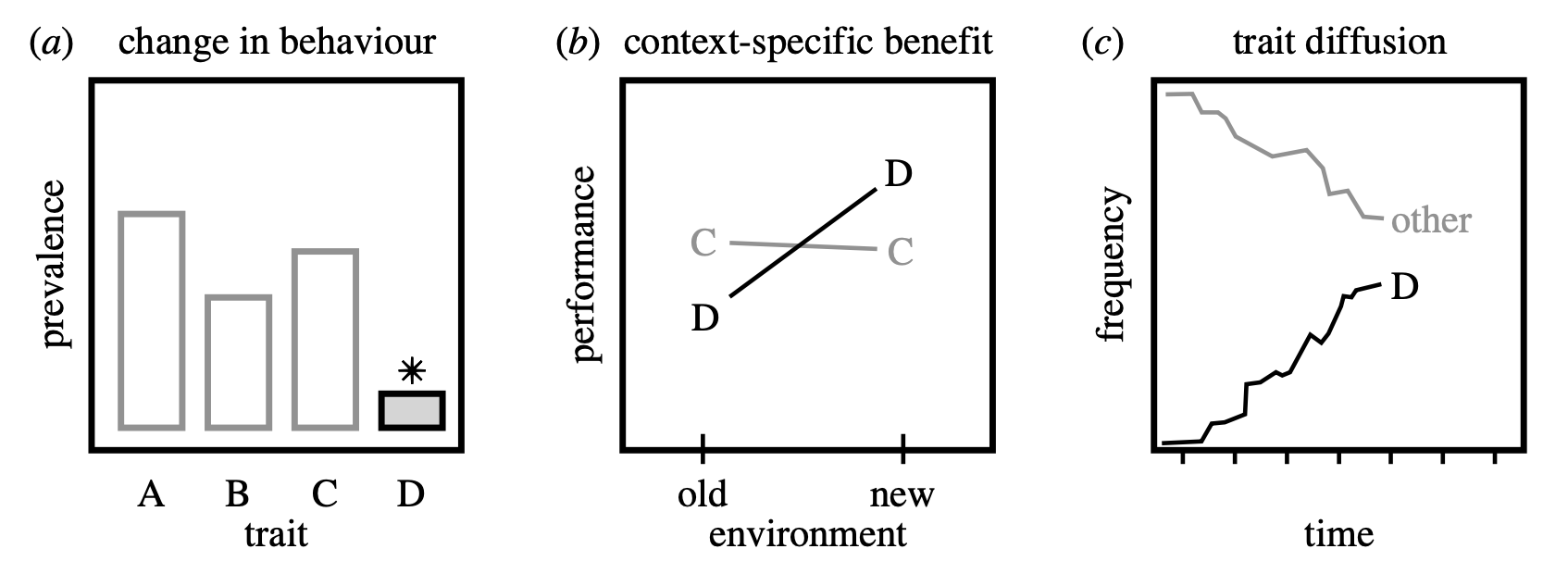
We started by employing a operational approach to identify ‘cultural adaptation‘ as a mechanistic process of population-level cultural change, using established empirical criteria, based on the science of cultural evolution (Cultural Evolution Society). The basic criteria for adaptation are simple: (a) a learnable behavior, (b) that conveys a benefit in the new environment, and (c) spreads as a result.

A simple set of empirical criteria for identifying cultural adaptation, after Mesoudi & Thornton, 2018.

We then specify the environmental change must be climate change, and use these criteria to evaluate two aspects of United States agriculture. First, we examined the practice of cover cropping for signs of cultural adaptation to climate change.

Cover cropping is the practice of planting a non-harvested crop between regular harvest seasons. Cover cropping is easily learned (criterion a). Between 2012 and 2017, cover crops have spread to become much more common (criterion c). Also cover crops do offer agronomic benefits in certain conditions, some of which occur as a result of climate change (criterion b).

Cover cropping is rare but growing. Cover crop use increased from 10.2 million acres in 2012 to 15.3 million acres in 2017, a ~50% increase concentrated in the Midwest and northern Great Plains.

However, there is good evidence that these subsidies have enabled the spread of the practice. Thus, cover crops appear to be spreading due to changes in the economic environment more than as a result of changing climatic conditions. So, from a first pass analysis cover cropping does not appear to currently be a result of cultural adaptation to climate change in the US. This has important policy implications.

Second, we examined the farmers crop choices for signs of cultural adaptation to climate change. The choice of crop is readily learnable (criterion a), and crop have changed a lot in US history (criterion c), some crops survive and grow better in a given climate than others (criterion b). So the question is: in places where the climate has changed, do farmers actually plant crops that grow better in that new climate?

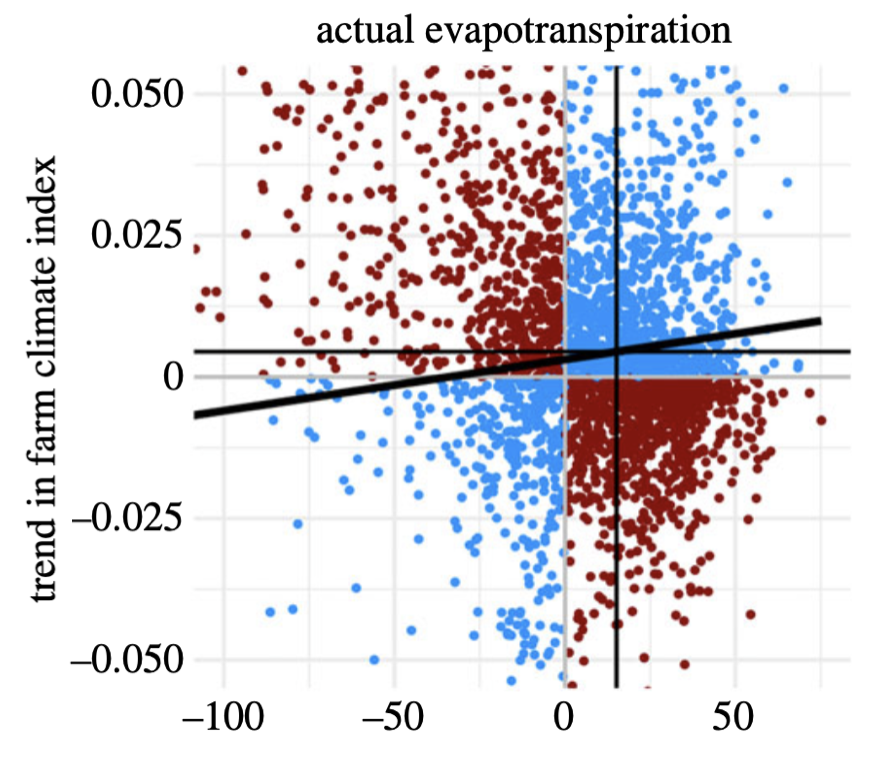
We answered this question with county-level data on climate and crop choice, in an analysis led by coauthor Matthew Kling. We found that overall across the nation, changes in crop choices tend to roughly match changes climate. We indicate cultural adaptation to climate change in crop choice with a simple matching of trends.

On average changes in crop choices trend along with changes in climate. Plotting change in crop climate index over change in climate variable, actual evapotranspiration (AET) provides a simple binary indicator of ‘climate adaptation.’

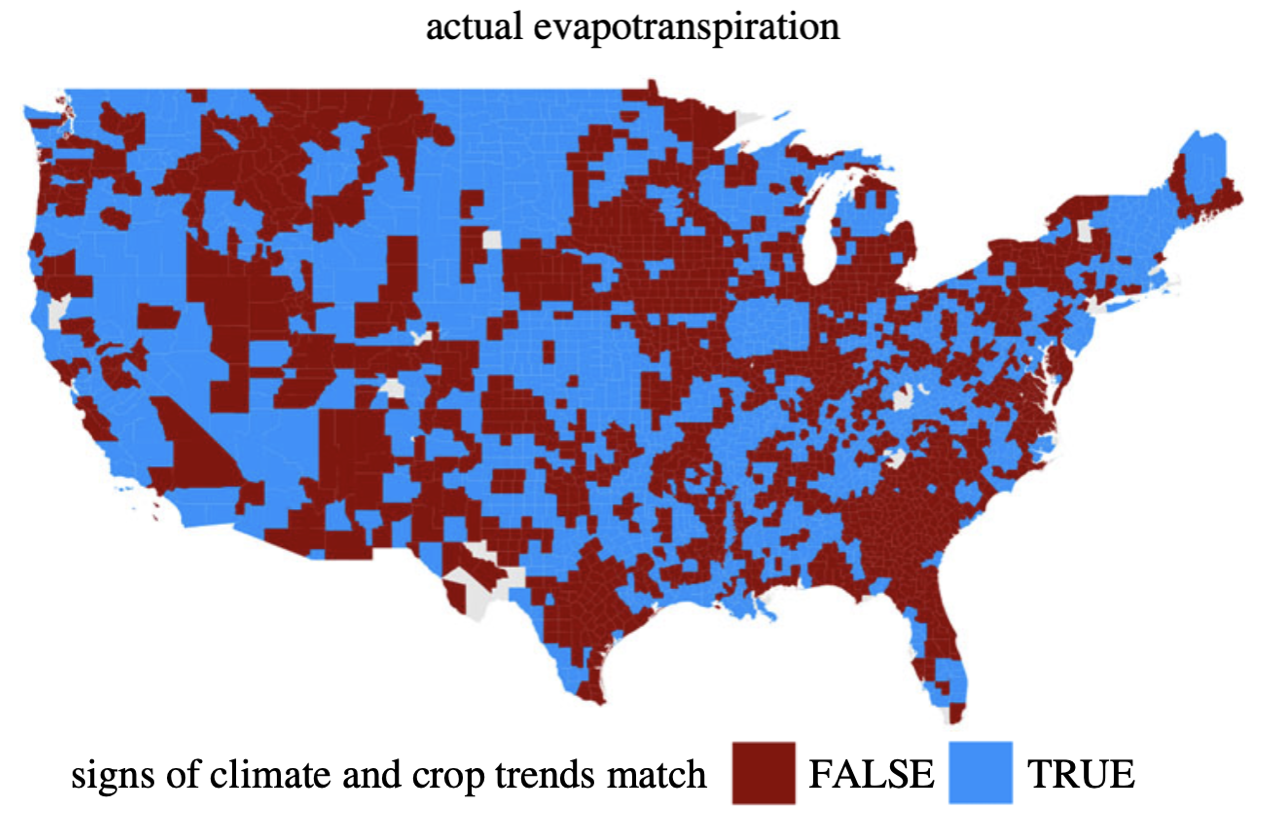
Not only that, our indicator of cultural adaptation to climate change is spatially clustered! Some regions tend to plant crops that roughly parallel climate trends, others do the opposite. Research on factors that differentiate these regions can benefit climate policy.

Cultural adaptation to climate change in crop choices is clustered regionally. Understanding what differentiates these regional clusters will be important for climate adaptation research.

This mechanistic approach to studying cultural adaptation to climate change instead of just “climate adaptation” has a number of important benefits:

  1. It allows researchers to empirically identify and measure climate adaptation (as an specific instance of the broader phenomenon of cultural adaptation).
  2. It helps policy by distinguishing adaptation from beneficial outcomes. They are not always the same! Remember that cover crops appear to have adapted to a new economic environment rather than a changing climate.
  3. It provides a better way to design policy for adaptation. Since the mechanisms of *adaptation* are different than simply adopting the behavior. So, if people only adopt a behavior because of an incentive, we have only achieved spread, but not adaptation.

Cultural adaptation to climate change solves some of the problems with climate adaptation research: it enables rigorous comparisons, testable hypotheses, and distinguishing adaptive change from desirable policy outcomes. See more in our paper: doi.org/10.1098/rstb.2022.0397 [open access preprint: osf.io/pq7r5]

Thanks especially to coauthors Matthew Kling and Meredith Niles. The paper is the first of a series on this topic, and was published in a special issue in Philosophical Transactions B entitled ‘Climate change adaptation needs a science of culture‘ which contains a number of other helpful papers on the topic as well.

UMaine news on the study: https://umaine.edu/news/blog/2023/10/30/umaine-uvm-researchers-conduct-first-ever-study-of-cultural-adaptation-to-climate-change/

Posted in climate change, cultural adaptation, cultural evolution, research, sustainabilty | Tagged , , , | Comments Off on Cultural Adaptation to Climate Change in US Agriculture