I was honored to give a colloquium talk at the KLI last week on the Science of an Evolutionary Transition in Humans. There’s a lot to cover, so it’s a dense talk.
Transmissions Podcast interview
I was interviewed by Feryl Badiani for the Cultural Evolution Society’s Transmissions podcast. It was a fun conversation, but I biffed the introduction, so you can skip that part.
Posted in Uncategorized
Leave a comment
Postdoc in agent-based human-earth system modelling
I’m happy to be joining Peter Søgaard Jørgensen on his Anthropocene Navigator research project, which is looking for an integrative, trans-disciplinary postdoc on modeling global-scale social, economic and political dynamics in the Anthropocene.
We are looking for a modeller with experience in agent-based or human earth system modelling and with interest in engaging in transdisciplinary sustainability science to work as one of two postdocs in the Anthropocene navigator project in a two-three year position here in Stockholm. The project involves a larger working group of international collaborators that will meet through synthesis workshops.
The Anthropocene navigator project aims to find robust coalition building strategies to advance global sustainability goals in times of polycrisis, including destabilisation of international cooperation. The project aims to achieve this goal by combining keystone actor mapping and engagement of diplomats with integrated human-Earth system modelling.
The postdoc will be in charge of modelling coalition building strategies between nation states and other key actors to achieve the 1.5 C goal, the 30 by 30 goal and the target of Zero pandemics. This is currently planned to be done by implementing selected Anthropocene traps (Søgaard Jørgensen et al. 2024) in the coupled modelling framework Copan:LPJML (Breier et al. 2025).
Key collaborators in the project for the modelling postdoc include Lan Wang Erlandson, Jonathan Donges, Tim Waring and Peter Søgaard Jørgensen. Please inquiries to peter.sogaard.jorgensen@su.se.
Posted in Uncategorized
Leave a comment
Post-Doctoral Position on Cultural Adaptation in Forest Management
We are looking for a post-doctoral researcher to develop the applied study of human cultural adaptation. Prior research on human cultural adaptation has been largely theoretical (see Fogarty and Kandler, 2020). This project will develop specific estimates of the process and strength of cultural adaptation in an applied context. We are seeking a PhD researcher with a strong quantitative background in biology, evolution, or social science, and previous experience in mathematical modeling and/or behavioral experimentation.
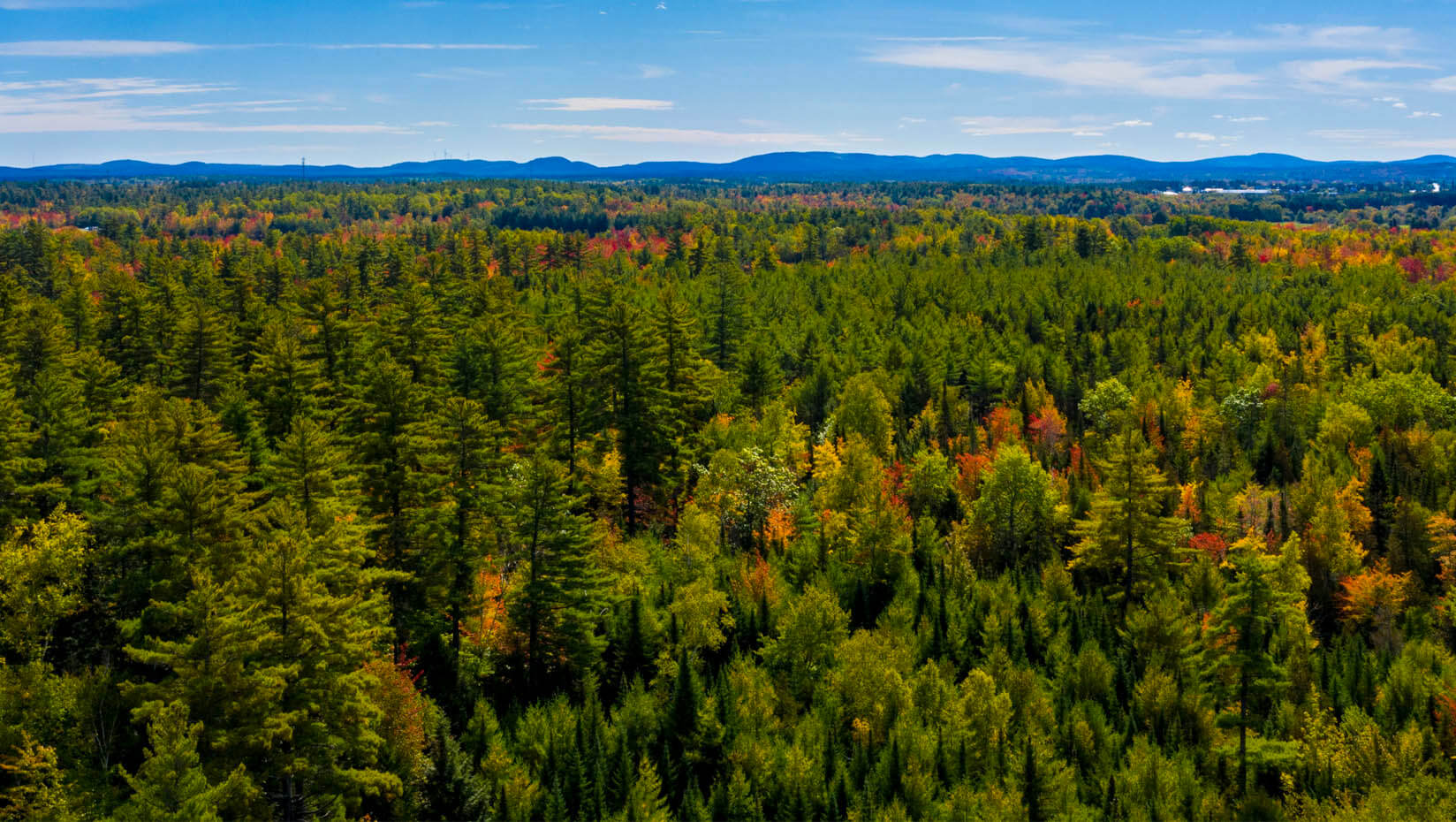
Study system: Forest management is a multidimensional challenge. Rural forest owners have many goals including managing invasive plants and reducing populations of disease-carrying ticks. In addition, rural populations are sparse, and opportunities to learn the best approaches directly, or from others, are seasonal and rare. These factors make cultural adaptation more difficult. The project will seek to estimate the strength of cultural adaptation in rural populations in the complex environment of forest management in the Northeastern United States, especially Maine and Vermont.
Approaches: The project will use model-based estimation, surveys and behavioral experiments to estimate the likelihood or strength of cultural adaptation in the study system, with relevance for policy intervention.
Purpose: Complete a multi-method study of human cultural adaptation to environmental challenges with application to invasive plants and tick-borne disease threats among woodland owners with supervision from Dr. Waring and in collaboration with Dr. Gardner, and Dr. Leahy, and the project team.
Position: The position is for 2 years, contingent on successful performance and funding. The target start date is September 1, 2025, or as soon as practicable. The salary range for this position is $45,000 to $48,000 commensurate with qualifications and experience. The position is part of a 5 year National Science Foundation project.
Apply here: Postdoctoral Research Associate
Application deadline: 4:30 p.m. EST on July 11, 2025.
Contact: Dr. Tim Waring (timothy.waring@maine.edu)
Transmissions: a podcast on cultural evolution!
I’m excited to see this new student-created podcast called “Transmission” on cultural evolution. Feryl Badiani interviews cultural evolutionary researchers, and Ishaan Sinha on graphics design and technical.
Posted in Uncategorized
Leave a comment
 ACE Lab: Applied Cultural Evolution Laboratory