
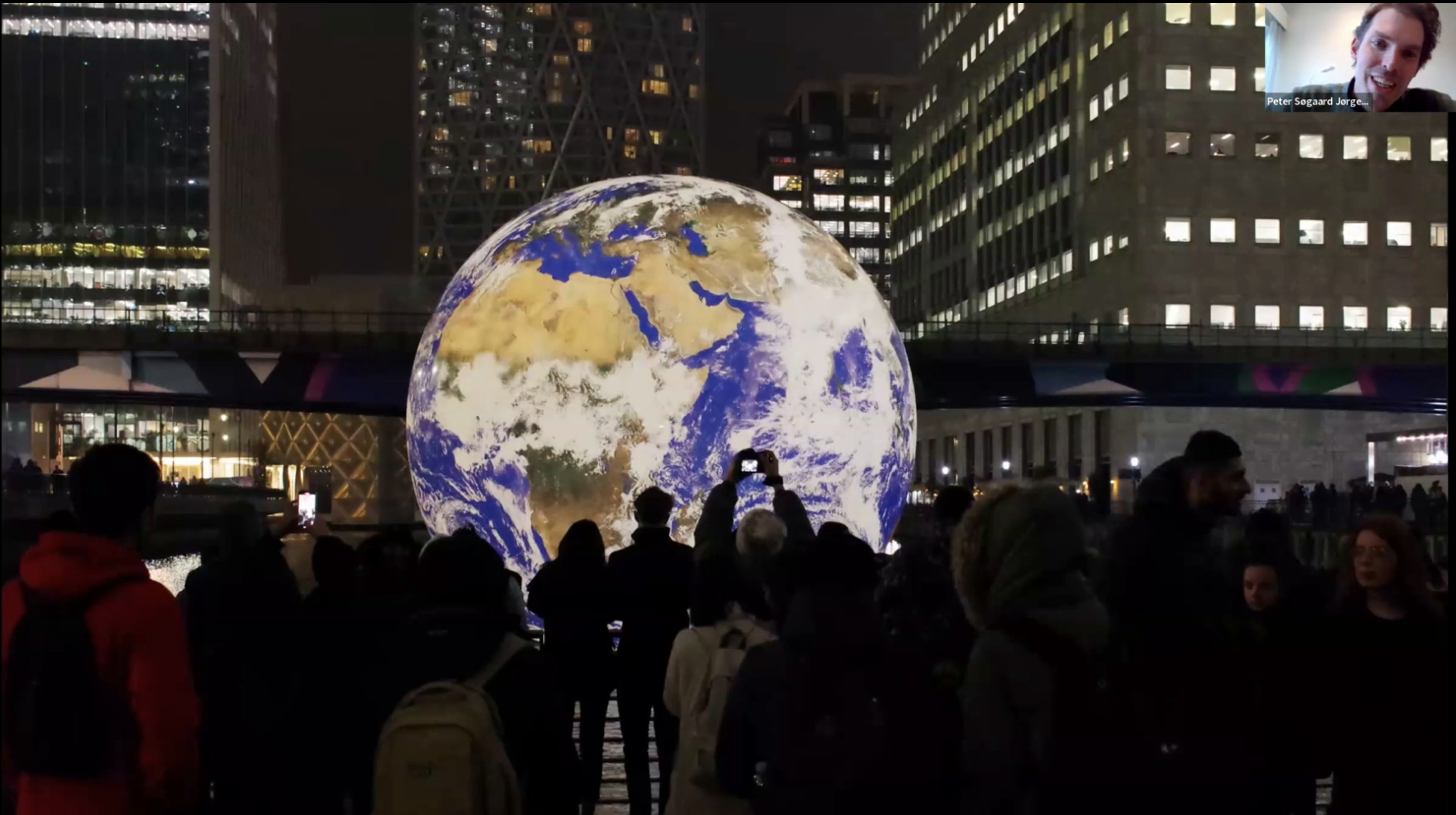
We recently hosted a global webinar as part of the Philosophical Transactions of the Royal Society B issue on Evolution and sustainability: gathering the strands for an Anthropocene synthesis. Chaired by Peter Søgaard Jørgensen from the Stockholm Reslience Center in Sweden, Vanessa Weinberger at Universidad Mayor in Chile, and myself, the truly global webinar included short presentations from five authors from the special issue, including: Mauricio Lima, from Pontificia Universidad Católica de Chile, James Liu from Massey University in New Zealand, Erle Ellis, from University of Maryland, USA, Karolina Safarzynska from the University of Warsaw in Poland, Lukas von Flüe from the University of Lausanne in Switzerland.
The videos, slides, and discussion are available for free on the excellent Cassyni platform, here.
Abstract. How did human societies evolve to become a major force of global change? What dynamics can lead societies on a trajectory of global sustainability? The astonishing growth in human population, economic activity, technological capacity and environmental impact – together known as the Anthropocene – has brought these questions to the fore. In this theme issue, we bring together the major elements of a theory of human evolution and sustainability on Earth. We show how diverse theories and approaches help to understand the past, present and future evolution of the Anthropocene, and discover new opportunities for moving towards sustainability. Collectively, the work provides the basis for an evolutionary synthesis of the human predicament on planet Earth.

 ACE Lab: Applied Cultural Evolution Laboratory