
Since 2013, cultural evolutionary scientists have been working to determine how to use the theory, methods and findings of the science of cultural evolution to help solve sustainability and environmental problems.
What we learned
Applying the science of cultural evolution to sustainability, resilience, and environmental topics, is no different from encouraging beneficial social change in any domain, from health to literacy, from infrastructure to human rights, from public sanitation to human trafficking. At their base, these are all examples of efforts at beneficial social change, which can be enhanced through the evolutionary science of culture. It starts with three Foundations.
Three Foundations
Any effort to encourage beneficial social change must address three central evolutionary dynamics in any human social system:
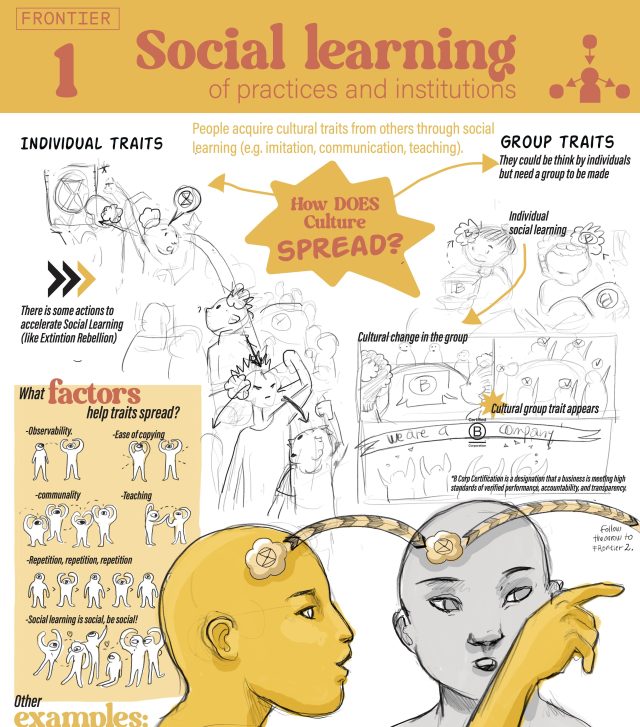
Social Learning
Humans learn behavior, beliefs, habits and skills (i.e. culture) from each other. We can learn useful skills, and bad habits, scientific methods, and self-harming conspiracy theories. To help people learn beneficial practices and beliefs, we should encourage transparency and accuracy of social information.
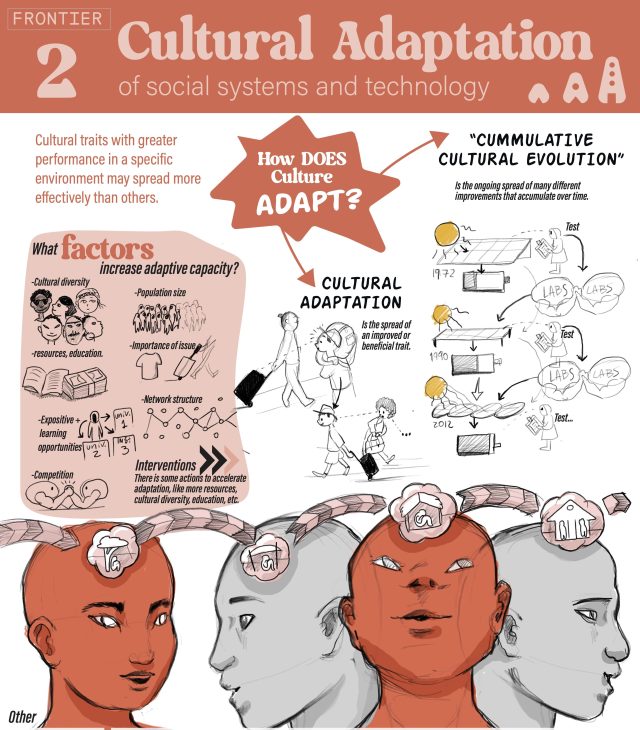
Cultural Adaptation
Humans do not just transmit cultural practices, they adapt to their natural and social environments by experimenting and modifying those practices, accumulating refinements and improving performance over generations. We benefit from many lifetimes of accumulated cultural adaptation. To benefit society, we should seek to make sure that socially beneficial practices are adaptive for users.
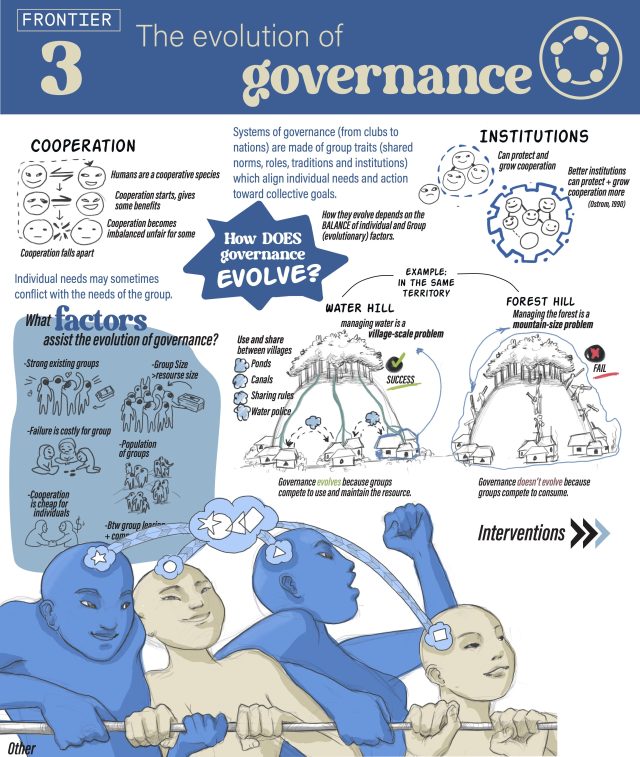
Governance
Humans form social groups with shared identities, behavioral expectations, leaders and rules. Our groups shape the course of our lives, but they vary dramatically. To benefit society, we should seek to build social groups that align adaptive individual behavior with beneficial group practices.
 ACE Lab: Applied Cultural Evolution Laboratory